
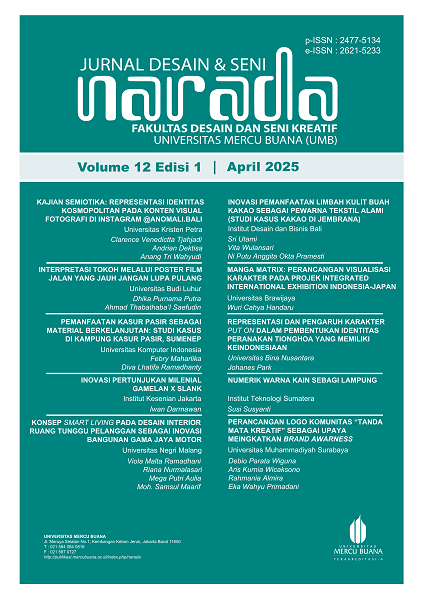
KONSEP SMART LIVING PADA DESAIN INTERIOR RUANG TUNGGU PELANGGAN SEBAGAI INOVASI PERAWATAN BANGUNAN BENGKEL GAMA JAYA MOTOR
Keywords:
Interior Design, Smart living Concept, Workshop Building Maintenance, Customer Waiting Area.Abstract
Gama Jaya Motor is a car repair and maintenance workshop located in Surabaya. As a business entity, Gama Jaya Motor needs to manage its property to support its operations, one of which is building maintenance. In a workshop business, the customer waiting room is one of the most important aspects of property management, as it is directly used by customers. The interior of the customer waiting room should be designed to be attractive and aesthetically pleasing while maintaining customer comfort. This can be achieved by implementing an interior design concept based on smart living. This concept integrates various smart devices based on the Internet of Things (IoT) into the interior or building design, not only to enhance customer comfort but also to improve the operational efficiency of the workshop. This study employs a design-based case study method. The design process is carried out through field observations, interviews, and an analysis of spatial and technological requirements that can be integrated. The smart devices applied in the design include automatic lighting systems, CCTV, smart switches, smart sockets, and IoT-based temperature control systems. In addition to enhancing customer comfort, the implementation of the smart living concept is also expected to improve energy efficiency and the security of the workshop environment.
References
Arrohman, Z. D., Andriani, W., & Gunawan, G. (2023). Analisis Penerapan Smart living Dalam Pembangunan Smart City Di Kota Tegal. Jurnal Cahaya Mandalika ISSN 2721-4796 (online), 4(2), 347-354.
Barbera, S.I. (2023). Revolutionizing Italian Homes : Embracing the Smart Home Era in the Housing Landscape. Research Square, 1-19.
DOI:https://doi.org/10.21203/rs.3.rs-3272478/v1
Hadi, S. & K.A. Pangestu. (2022). Smart Office System Based Internet of Things, Jurnal Sistemasi Sistem Informasi. 11(2). 377-390.
DOI:https://doi.org/10.32520/stmsi.v11i2.1745
Hayati, A., Bararatin, K., Utami, A. S. P. R., Septanti, D., Santosa, H. R., Weichart, G., & Valent, M. K. (2017). From smart living into smart city: a lesson from Kampung of Surabaya. In UIA 2017 Seoul World Architects Congress, Seoul (pp. 1-6).
Marsyida, G.G., Sugiharto, Martono. (2018). Pemodelan Standar Operasional Prosedur Pemeliharaan dan Perawatan Komponen Arsitektural Kamar Fave Hotel Diponegoro Semarang, Wahana TEKNIK SIPIL, 23(1), 11-18.
DOI:http://dx.doi.org/10.32497/wahanats.v23i1
Marulak, P.S. &, B. Djatmika. (2004). Evaluasi Kepuasan Pengguna terhadap Pemeliharaan dan Perawatan Bangunan Gedung SMA Katolik Frateran Malang, JURNAL SIPILsains Fakultas Teknik, 14(1).
DOI:https://doi.org/10.33387/sipilsains.v14i1.7905
Peraturan Menteri Pekerjaan Umum Nomor 24/PRT/M/2008 Tentang Pedoman Pemeliharaan dan Perawatan Bangunan Gedung, 2008.
Ramadhani, V.M., M. Faqih, P. Setijanti. (2021). Preferensi Pilihan Jenis Hunian Berdasarkan Perilaku Belanja Generasi Z. PAWON : Jurnal Arsitektur, 2(5), 223-238.
DOI:https://doi.org/10.36040/pawon.v5i2.3672
Ramadhani, V.M. (2015). Reka Sehat Terapi Wanita Obesitas (Mala Ranum Apsara), Tugas Akhir Program Sarjana Jurusan Arsitektur Fakultas Teknik Sipil dan Perencanaan Institut Teknologi Sepuluh Nopember Surabaya.
Ramadhani, V.M. (2018). Preferensi Berdasarkan Gaya Hidup Generasi Z sebagai Future Market Properti Hunian, Tesis Program Magister Bidang Keahlian Real estate Departemen Arsitektur Fakultas Arsitektur Desain dan Perencanaan Institut Teknologi Sepuluh Nopember Surabaya.
Santosa, A. (2005). Pendekatan Konseptual dalam Proses Perancangan Interior, Dimensi Interior : Jurnal Dimensi Interior Universitas Kristen Pertra Surabaya, 13-18.
DOI: https://doi.org/10.9744/interior.3.2.
Smith, J, R. Thomas, M. Anderson. (2005). The Rise of Smart Homes: A Sociotechnical Perspective, in : Journal of Intelligent Systems, 27(4), 345-367.
Downloads
Published
How to Cite
Issue
Section
License
A writer who will publish their article in the NARADA Journal of Design and Art agrees to the following conditions:
- The author owns the copyright and grants the rights to NARADA Journal of Design and Art as the party entrusted with publishing the article for the first time simultaneously licensed under the "Creative Commons Attribution-ShareAlike 4.0" License. This makes it possible for other people to share the work with a form of acknowledgment of authorship of the work and initial publication in this journal according to the authorship of the article provided.
- Authors may enter into separate additional contractual agreements for non-exclusive distribution of the published journal version of the work (e.g., posting it to an institutional repository or publishing it in a book) with acknowledgment of initial publication in the NARADA Journal of Design and Art.
- Authors are permitted and asked to post their work online (for example, institutional repositories or on personal websites) after the article publication process. This avoids double publication or multiple submissions which will affect the similarity of writing of the published work.
- In order to maintain the value of originality and similarity of articles sent or submitted. Authors are asked to temporarily remove or hide the original article from other online systems until they receive the results and decisions from the NARADA Journal of Design and Art regarding the decision to publish the article.
- The author, in this case the contributing author (Contributor Author), will be sent a form or letter stating the validity of the scientific work, signed on an IDR 10,000 stamp. Then the author will be asked to send the email to [email protected].
Pemberitahuan Hak Cipta
Seorang penulis yang akan menerbitkan artikelnya dalam NARADA Jurnal Desain dan Seni setuju dengan ketentuan berikut:
- Penulis memiliki hak cipta dan memberikan hak kepada pihak NARADA Jurnal Desain dan Seni sebagai pihak yang diberikan kepercayaan untuk mempublikasi artikelnya pertama kali secara bersamaan dilisensikan di bawah Lisensi "Creative Commons Attribution-ShareAlike 4.0". Hal ini memungkinkan kepada orang lain untuk membagi karya dengan bentuk pengakuan kepengarangan karya dan publikasi awal dalam jurnal ini sesuai dengan penulisan artikel yang diberikan.
- Penulis dapat membuat perjanjian kontrak tambahan yang terpisah untuk distribusi non-eksklusif versi jurnal yang diterbitkan dari karya tersebut (misalnya, mempostingnya ke repositori institusional atau menerbitkannya dalam sebuah buku) dengan pengakuan publikasi awal dalam NARADA Jurnal Desain dan Seni.
- Penulis diizinkan dan diminta untuk mempostingkan karyanya secara online (semisal, repositori institusional atau di situs web pribadi) setelah proses penerbitan artikel, Hal ini menghindari adanya double publikasi atau pengajuan jamak yang akan berpengaruh kepada adanya kesamaan penulisan dari karya yang diterbitkan.
- Demi menjaga nilai orisinalitas dan nilai kesamaan dari artikel yang dikirim atau diajukan. Penulis diminta untuk menghilangkan atau menyembunyikan secara sementara artikel orisinil dari sistem online lain yang sampai mendapatkan hasil nilai dan ketetapan dari pihak NARADA Jurnal Desain dan Seni mengenai keputusan publikasi dari artikel.
- Penulis dalam hal ini penulis kontributor (Contributor Author) akan dikirimkan form atau surat pernyataan keabsahan karya ilmiah, yang ditanda tangani di atas materai 10000. Dan selanjutnya penulis diminta untuk mengirimkan ke email [email protected].
