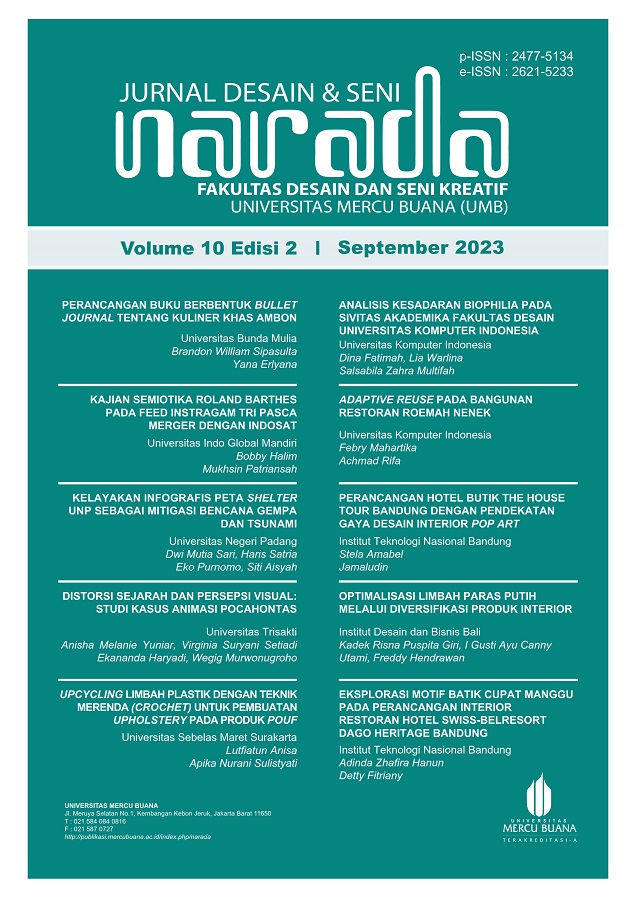
OPTIMALISASI LIMBAH PARAS PUTIH MELALUI DIVERSIFIKASI PRODUK INTERIOR
DOI:
https://doi.org/10.22441/narada.2023.v10.i2.009Keywords:
Artworks, industry, interior, sandstone, wasteAbstract
Saka Bali Arts, as one of the home-based woodcarving industries in Singapadu Village, Gianyar Regency, Bali, has a potential to process white sandstone residue into artworks. Using sandstone as the main base material, Saka Bali Arts produces 1.4 cubic to 2 tons monthly of sandstone residue. Normally, this is disposed of or used as landfill material for building construction or sent to other vendors to produce artworks like small sculptures and reliefs with simpler shapes, depending on the customer's demand. However, producing processed white sandstone residue received little attention from producers and consumers. This situation resulted in the lack of diversified artwork products displayed on the storefront. The main reasons are the lack of local artisans' skills to produce different kinds of products from sandstone residue and the lack of a marketing development strategy, so the market reach of processed sandstone residue is unexploited. Hence, efforts are needed to develop more specific interior products and a product diversification strategy through product recycling to increase long-term sales. Another way to support this is by optimizing branding and marketing to expand marketing. This study uses the methodology of Murdjito (2022) in the form of stages carried out in the implementation of community service activities. In the long term, we expect Saka Bali Arts to become a model for similar home-based industries in optimizing white parasite stone material residues through increased product innovation, sales, and profitability.
Downloads
References
Afandi, A., Laily, N., Wahyudi, N., Umam, M. H., Kambau, R. A., Rahman, S. A., Sudirman, M., Jamilah, J., Kadir, N. A., Junaid, S., Nur, S., Parmitasari, R. D. A., Nurdiyanah, N., Wahyudi, J., & Wahid, M. (2022). Metodologi Pengabdian Masyarakat. Jakarta: Direktorat Pendidikan Tinggi Keagamaan Islam Kementerian Agama RI.
Ching, F. D. K., & Binggeli, C. (2018). Interior Design Illustrated. New Jersey: John Wiley & Son.
Jayadi, K., Said, A. A., & Cahyadi, D. (2019). Strategi Diversifikasi Produk Turunan Tenun Sutera Wajo. Seminar Nasional LP2M UNM 2019 (November, 21), Peran Penelitian Dalam Menunjang Percepatan Pembangunan Berkelanjutan Di Indonesia, 414–421. https://ojs.unm.ac.id/semnaslemlit/article/view/11455
Kotler, P., & Keller, K. L. (2012). Marketing Management. (14th ed.). New York: Prentice Hall.
Li, C.-M., Tao Cui, R. N., Lin, H., & Shan, Y. (2019). Does Diversification Help Improve The Performance of Coal Companies ? Evidence from China’s Listed Coal Companies. Resources Policy, 61, 88–98.
DOI:https://doi.org/10.1016/j.resourpol.2019.01.013
Nurhayati, S. (2017). Pengaruh Citra Merek, Harga, dan Promosi Terhadap Keputusan Pembelian Handphone Samsung di Yogyakarta. Jurnal Bisnis, Manajemen, Dan Akuntansi, 4(2), 60–69.
Pembayun, P. A. (2021). Strategi Diversifikasi Produk Sebagai Upaya Menghadapi Persaingan. Jurnal Utilitas, 7(1), 1–6.
Rosilawati, Y. (2008). Employee Branding sebagai Strategi Komunikasi Organisasi untuk Mengkomunikasikan Citra Merek (Brand-Image). Jurnal Ilmu Komunikasi, 6(3), 153–161.
DOI:https://doi.org/10.31315/jik.v6i3.61
Tjiptono, F. (2015). Strategi Pemasaran. (4th ed.). Yogyakarta: CV Andy Offset.
Wismayasa, W. (2022, Desember 23). Wawancara.
Wulandari, M., Wahyuni, S., & Zulianto, M. (2021). Strategi Diversifikasi Produk Pada UMKM Kerajinan Bambu di Desa Gintangan Kecamatan Blimbingsari Kabupaten Banyuwangi. Jurnal Pendidikan Ekonomi: Jurnal Ilmiah Ilmu Pendidikan, Ilmu Ekonomi, Dan Ilmu Sosial, 15(1), 103–109.
Downloads
Published
How to Cite
Issue
Section
License
A writer who will publish their article in the NARADA Journal of Design and Art agrees to the following conditions:
- The author owns the copyright and grants the rights to NARADA Journal of Design and Art as the party entrusted with publishing the article for the first time simultaneously licensed under the "Creative Commons Attribution-ShareAlike 4.0" License. This makes it possible for other people to share the work with a form of acknowledgment of authorship of the work and initial publication in this journal according to the authorship of the article provided.
- Authors may enter into separate additional contractual agreements for non-exclusive distribution of the published journal version of the work (e.g., posting it to an institutional repository or publishing it in a book) with acknowledgment of initial publication in the NARADA Journal of Design and Art.
- Authors are permitted and asked to post their work online (for example, institutional repositories or on personal websites) after the article publication process. This avoids double publication or multiple submissions which will affect the similarity of writing of the published work.
- In order to maintain the value of originality and similarity of articles sent or submitted. Authors are asked to temporarily remove or hide the original article from other online systems until they receive the results and decisions from the NARADA Journal of Design and Art regarding the decision to publish the article.
- The author, in this case the contributing author (Contributor Author), will be sent a form or letter stating the validity of the scientific work, signed on an IDR 10,000 stamp. Then the author will be asked to send the email to [email protected].
Pemberitahuan Hak Cipta
Seorang penulis yang akan menerbitkan artikelnya dalam NARADA Jurnal Desain dan Seni setuju dengan ketentuan berikut:
- Penulis memiliki hak cipta dan memberikan hak kepada pihak NARADA Jurnal Desain dan Seni sebagai pihak yang diberikan kepercayaan untuk mempublikasi artikelnya pertama kali secara bersamaan dilisensikan di bawah Lisensi "Creative Commons Attribution-ShareAlike 4.0". Hal ini memungkinkan kepada orang lain untuk membagi karya dengan bentuk pengakuan kepengarangan karya dan publikasi awal dalam jurnal ini sesuai dengan penulisan artikel yang diberikan.
- Penulis dapat membuat perjanjian kontrak tambahan yang terpisah untuk distribusi non-eksklusif versi jurnal yang diterbitkan dari karya tersebut (misalnya, mempostingnya ke repositori institusional atau menerbitkannya dalam sebuah buku) dengan pengakuan publikasi awal dalam NARADA Jurnal Desain dan Seni.
- Penulis diizinkan dan diminta untuk mempostingkan karyanya secara online (semisal, repositori institusional atau di situs web pribadi) setelah proses penerbitan artikel, Hal ini menghindari adanya double publikasi atau pengajuan jamak yang akan berpengaruh kepada adanya kesamaan penulisan dari karya yang diterbitkan.
- Demi menjaga nilai orisinalitas dan nilai kesamaan dari artikel yang dikirim atau diajukan. Penulis diminta untuk menghilangkan atau menyembunyikan secara sementara artikel orisinil dari sistem online lain yang sampai mendapatkan hasil nilai dan ketetapan dari pihak NARADA Jurnal Desain dan Seni mengenai keputusan publikasi dari artikel.
- Penulis dalam hal ini penulis kontributor (Contributor Author) akan dikirimkan form atau surat pernyataan keabsahan karya ilmiah, yang ditanda tangani di atas materai 10000. Dan selanjutnya penulis diminta untuk mengirimkan ke email [email protected].









