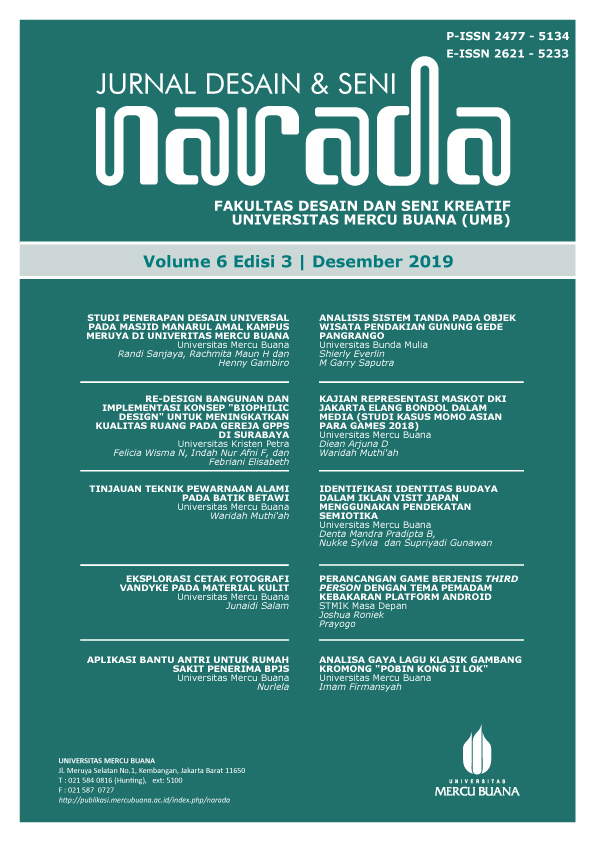
IDENTIFIKASI INDENTITAS BUDAYA DALAM IKLAN VISIT JAPAN MENGGUNAKAN PENDEKATAN SEMIOTIKA
DOI:
https://doi.org/10.22441/narada.2019.v6.i3.008Keywords:
Semiotics, Tourism, CampaignAbstract
Japanese tourism campaign with the theme Where tradition meets the future success in advertising Japanese tourism itself. This advertisement invites tourists to feel the traditional and modern side in Japan. Behind that success is certainly a question, what are the signs in the ad that represent Japanese cultural identity. Departing from the above problems, researchers used Roland Barthes's Semiotics approach which aims to examine the signs and meanings of the success of these advertisements.Researchers limit the problem to only identifying signs of cultural identity for each scene that lasts three minutes. The researcher clarified between signifier, signified, denotation and connotation meaning to find out what cultural identity each scene contained. Hopefully from the results of this study it can be concluded that many tourism advertising materials insert cultural identity.
Downloads
References
Roland, B. (1983). Mythologies. London: Granada.
Roland, B. (2007) Petualangan Semiologi. Yogyakarta: Pustaka Pelajar.
Fiske, J. (1990). Cultural and Communication Studies. Yogyakarta: Jalasutra.
Haryono, S.R. (2017). Identitas Budaya Indonesia: Analisis Semiotika Roland Barthes Dalam Iklan Aqua Versi “Temukan Indonesiamu”. e-Proceeding of Management, 4(3), Hal.3265-3275.
Hoed, Benny H. (2014). Semiotik dan Dinamika Sosial Budaya. Jakarta: Komunitas Bambu.
Istanto, F. H. (2005). Rajutan Semiotika Untuk Sebuah Iklan Studi Kasus Iklan Long Beach. Nirmana, 2(2), Hal. 113-127.
Littlejohn, S. W & Karen A. F. (2009). Teori Komunikasi, edisi 9. Jakarta: Salemba Humanika.
Sobur, A. (2003). Semiotika Komunikasi. Bandung: PT Remaja Rosdakarya.
Sobur, A. (2004). Analisis Teks Media; Suatu Wacana Untuk Analisis Wacana,. Analisis Semiotik, dan Analisis Freming. Bandung: PT Remaja Rosdakarya.
Strinati, D. (2016). Popular Culture (Budaya Populer): Pengantar Menuju Budaya Populer. Jakarta: Narasi.
Sugiyono. (2015). Metode Penelitian Kuantitatif, Kualitatif dan R&D. Bandung: Afabeta.
Sunardi, S.T. (2004). Semiotika Negativa. Yogyakarta: Buku Baik.
Syuropati & Subachman. (2012). 7 Teori Sastra Kontemporer & 17 tokohnya (Sebuah Perkenalan). Yogyakarta: In Azna Books.
Downloads
Published
How to Cite
Issue
Section
License
A writer who will publish their article in the NARADA Journal of Design and Art agrees to the following conditions:
- The author owns the copyright and grants the rights to NARADA Journal of Design and Art as the party entrusted with publishing the article for the first time simultaneously licensed under the "Creative Commons Attribution-ShareAlike 4.0" License. This makes it possible for other people to share the work with a form of acknowledgment of authorship of the work and initial publication in this journal according to the authorship of the article provided.
- Authors may enter into separate additional contractual agreements for non-exclusive distribution of the published journal version of the work (e.g., posting it to an institutional repository or publishing it in a book) with acknowledgment of initial publication in the NARADA Journal of Design and Art.
- Authors are permitted and asked to post their work online (for example, institutional repositories or on personal websites) after the article publication process. This avoids double publication or multiple submissions which will affect the similarity of writing of the published work.
- In order to maintain the value of originality and similarity of articles sent or submitted. Authors are asked to temporarily remove or hide the original article from other online systems until they receive the results and decisions from the NARADA Journal of Design and Art regarding the decision to publish the article.
- The author, in this case the contributing author (Contributor Author), will be sent a form or letter stating the validity of the scientific work, signed on an IDR 10,000 stamp. Then the author will be asked to send the email to [email protected].
Pemberitahuan Hak Cipta
Seorang penulis yang akan menerbitkan artikelnya dalam NARADA Jurnal Desain dan Seni setuju dengan ketentuan berikut:
- Penulis memiliki hak cipta dan memberikan hak kepada pihak NARADA Jurnal Desain dan Seni sebagai pihak yang diberikan kepercayaan untuk mempublikasi artikelnya pertama kali secara bersamaan dilisensikan di bawah Lisensi "Creative Commons Attribution-ShareAlike 4.0". Hal ini memungkinkan kepada orang lain untuk membagi karya dengan bentuk pengakuan kepengarangan karya dan publikasi awal dalam jurnal ini sesuai dengan penulisan artikel yang diberikan.
- Penulis dapat membuat perjanjian kontrak tambahan yang terpisah untuk distribusi non-eksklusif versi jurnal yang diterbitkan dari karya tersebut (misalnya, mempostingnya ke repositori institusional atau menerbitkannya dalam sebuah buku) dengan pengakuan publikasi awal dalam NARADA Jurnal Desain dan Seni.
- Penulis diizinkan dan diminta untuk mempostingkan karyanya secara online (semisal, repositori institusional atau di situs web pribadi) setelah proses penerbitan artikel, Hal ini menghindari adanya double publikasi atau pengajuan jamak yang akan berpengaruh kepada adanya kesamaan penulisan dari karya yang diterbitkan.
- Demi menjaga nilai orisinalitas dan nilai kesamaan dari artikel yang dikirim atau diajukan. Penulis diminta untuk menghilangkan atau menyembunyikan secara sementara artikel orisinil dari sistem online lain yang sampai mendapatkan hasil nilai dan ketetapan dari pihak NARADA Jurnal Desain dan Seni mengenai keputusan publikasi dari artikel.
- Penulis dalam hal ini penulis kontributor (Contributor Author) akan dikirimkan form atau surat pernyataan keabsahan karya ilmiah, yang ditanda tangani di atas materai 10000. Dan selanjutnya penulis diminta untuk mengirimkan ke email [email protected].









