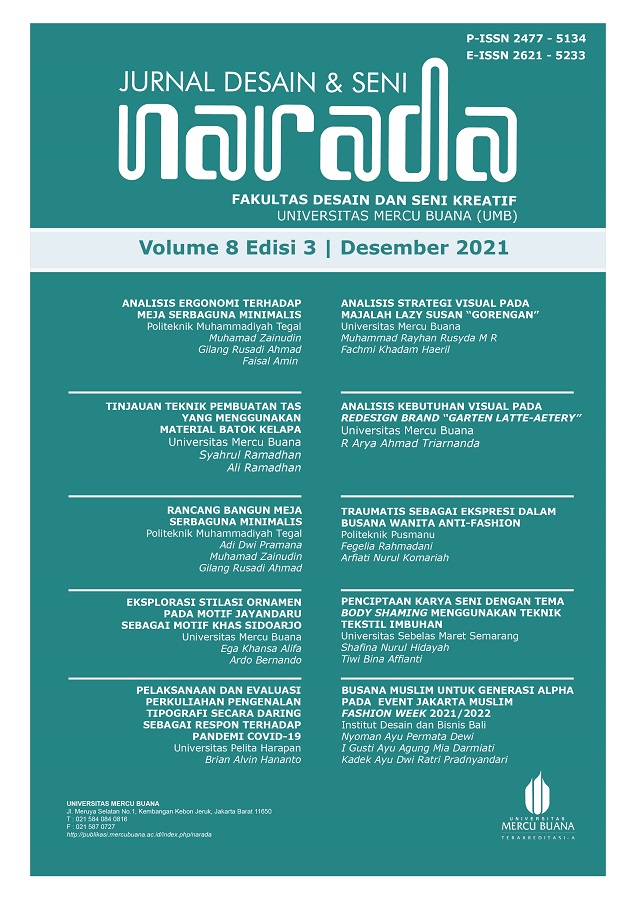
PENCIPTAAN KARYA SENI DENGAN TEMA BODY SHAMING MENGGUNAKAN TEKNIK TEKSTIL IMBUHAN
DOI:
https://doi.org/10.22441/narada.2021.v8.i3.009Keywords:
Body shaming, Novelty Textiles, Textile ArtAbstract
Physical bullying often occurs both on social media and on a daily basis. This action in the long term can have a negative impact on the victim, such as the emergence of excessive anxiety, shame, lack of confidence, to the emergence of eating disorders and other mental disorders. The phenomenon of physical bullying is manifested through a work of expression using textile affixing techniques. The stages of the design of the work carried out by the method of creation of works by SP Gustami through the exploration stage, the design stage and the embodiment stage. This artwork using additional textile techniques such as: quilting, slash quilt, decorative stitch, sewing, and application. The materials used include cotton, tile, flannel, embroidery thread, sewing thread, and others. Novelty textile chosen because it has a variety of techniques that are suitable for conveying messages in the work. This artwork express the sadness and gloomy feeling of the victims through Novelty textile.
Downloads
References
Aini, A. P., & Ari, K. (2020). Pengembangan Aplikasi Let’s End Body Shaming Untuk Meningkatkan Self Confidence. [Jurnal Mahasiswa S-1 Psikologi Pendidikan dan Bimbingan Konseling FKIP]. Surabaya: Universitas Negeri Surabaya.
Bahari, N. (2014). Kritik Seni: Wacana, Apresiasi, dan Kreasi. Yogyakarta: Pustaka Pelajar.
Dellinger, S. (1989). Psycho Geometrics: How to Use Geometric Psychology to Influence
People. New Jersey: Prentice Hall
Departemen Pendidikan Nasional. (2011). Kamus Besar Bahasa Indonesia. Jakarta: Gramedia Pustaka Utama.
Dolezal, L. (2015). The Body and Shame. Phenomenology, Feminism, and The Socially Shape Body. The United States of America: Lexington Book.
Gilbert, P. (2000). The evaluation of shame as a marker for relationship security: a biopsyhosocial approach. In. J.L. Tracy, R.W. Robins & J.P. Tanggney (Eds), The Self Conscious Emotions: Theory and Research. New York: Guilford Press.
Gustami, S. P. (2007). Butir-butir Mutiara Estetika Timur: Ide Dasar Penciptaan Seni Kriya Indonesia. Yogyakarta: Prasista.
Jumanta. (2005). Pesona Bunga untuk Sulam & Bordir. Jakarta: Pustaka Pembangunan Swadaya Nusantara.
Rizali, N. (2006). Tinjauan Desain Tekstil. Surakarta: UPT Penerbitan & Pencetakan UNS/Press.
Saragi, D. (2018). Pengembangan Tekstil Berbasis Motif dan Nilai Filosofis Ornamen Tradisional Sumatra. Jurnal Panggung, 28(2),161-174.
DOI: http://dx.doi.org/10.26742/panggung.v28i2.445
Triston, J., & Lombard, R. (2014). Contemporary Aplique: Cutting Edge Design & Techniques in Textile Art. London: Bastford.
Zharandont, P. (2013). “Pengaruh warna bagi suatu produk dan psikologis manusia”. [Jurnal Tugas Akhir]. Bandung: Fakultas Industri Kreatif, Desain Produk, Universitas Telkom.
Downloads
Published
How to Cite
Issue
Section
License
A writer who will publish their article in the NARADA Journal of Design and Art agrees to the following conditions:
- The author owns the copyright and grants the rights to NARADA Journal of Design and Art as the party entrusted with publishing the article for the first time simultaneously licensed under the "Creative Commons Attribution-ShareAlike 4.0" License. This makes it possible for other people to share the work with a form of acknowledgment of authorship of the work and initial publication in this journal according to the authorship of the article provided.
- Authors may enter into separate additional contractual agreements for non-exclusive distribution of the published journal version of the work (e.g., posting it to an institutional repository or publishing it in a book) with acknowledgment of initial publication in the NARADA Journal of Design and Art.
- Authors are permitted and asked to post their work online (for example, institutional repositories or on personal websites) after the article publication process. This avoids double publication or multiple submissions which will affect the similarity of writing of the published work.
- In order to maintain the value of originality and similarity of articles sent or submitted. Authors are asked to temporarily remove or hide the original article from other online systems until they receive the results and decisions from the NARADA Journal of Design and Art regarding the decision to publish the article.
- The author, in this case the contributing author (Contributor Author), will be sent a form or letter stating the validity of the scientific work, signed on an IDR 10,000 stamp. Then the author will be asked to send the email to [email protected].
Pemberitahuan Hak Cipta
Seorang penulis yang akan menerbitkan artikelnya dalam NARADA Jurnal Desain dan Seni setuju dengan ketentuan berikut:
- Penulis memiliki hak cipta dan memberikan hak kepada pihak NARADA Jurnal Desain dan Seni sebagai pihak yang diberikan kepercayaan untuk mempublikasi artikelnya pertama kali secara bersamaan dilisensikan di bawah Lisensi "Creative Commons Attribution-ShareAlike 4.0". Hal ini memungkinkan kepada orang lain untuk membagi karya dengan bentuk pengakuan kepengarangan karya dan publikasi awal dalam jurnal ini sesuai dengan penulisan artikel yang diberikan.
- Penulis dapat membuat perjanjian kontrak tambahan yang terpisah untuk distribusi non-eksklusif versi jurnal yang diterbitkan dari karya tersebut (misalnya, mempostingnya ke repositori institusional atau menerbitkannya dalam sebuah buku) dengan pengakuan publikasi awal dalam NARADA Jurnal Desain dan Seni.
- Penulis diizinkan dan diminta untuk mempostingkan karyanya secara online (semisal, repositori institusional atau di situs web pribadi) setelah proses penerbitan artikel, Hal ini menghindari adanya double publikasi atau pengajuan jamak yang akan berpengaruh kepada adanya kesamaan penulisan dari karya yang diterbitkan.
- Demi menjaga nilai orisinalitas dan nilai kesamaan dari artikel yang dikirim atau diajukan. Penulis diminta untuk menghilangkan atau menyembunyikan secara sementara artikel orisinil dari sistem online lain yang sampai mendapatkan hasil nilai dan ketetapan dari pihak NARADA Jurnal Desain dan Seni mengenai keputusan publikasi dari artikel.
- Penulis dalam hal ini penulis kontributor (Contributor Author) akan dikirimkan form atau surat pernyataan keabsahan karya ilmiah, yang ditanda tangani di atas materai 10000. Dan selanjutnya penulis diminta untuk mengirimkan ke email [email protected].









